6-9 October 2026 . International Amfiteater Symposium . Slovenski gledališki inštitut . Lubiana
The International Amfiteater Symposium: Speech on the (Dark) Times: Brecht’s Thought Then and Now
October 6-9 2026
Slovenski gledališki inštitut
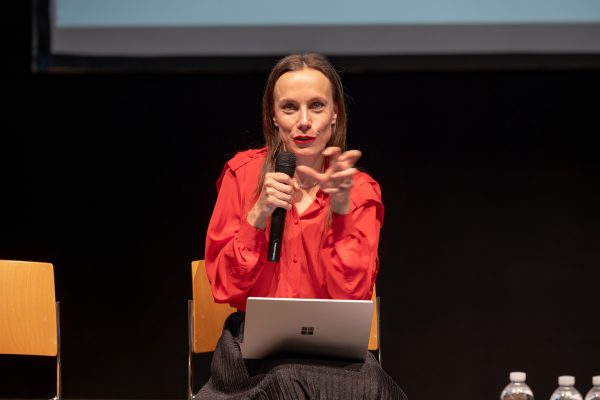
Agata Tomšič / ErosAntEros
Why Stage Brecht in the Age of Capitalist Realism? Two Practical Examples that Seek to “Change the World” through Theatre and the Power of Imagination
Presentation as part of the panel Puntila, Matti and Saint Joan in the Jungle of Capitalism
October 7 2026, h 14:20, Slovenski gledališki inštitut
In 2009, Mark Fisher published a pamphlet centred on the claim that “it is easier to imagine the end of the world than to imagine the end of capitalism”. By 2022, Der Spiegel reported that billionaires were rereading Marx to save capitalism from itself. In this context, the theatre company ErosAntEros drew on two of Brecht’s 1930s texts to challenge the global political-economic status quo, pursuing the utopia that rereading Brecht can help us to transcend capitalism. The company transposes Walter Benjamin’s concepts of quotation and dialectical image onto their practice, approaching one of Brecht’s most radical essays, “Five Difficulties in Writing the Truth”, and the play through which he sought to spread Marxist thought to the masses, Saint Joan of the Stockyards. Written after the 1929 stock market crash and Hitler’s rise to power, the two texts focus on the manipulation of information, finance, capital and worker exploitation, anticipating the years of economic crisis, industrial failures, land abandonment and poverty that led to World War II. ErosAntEros has staged both texts in multidisciplinary forms, where the spoken word engages in a powerful dialogue with music and video; in the latter case, within an international and multilingual production centred on one of the most radical and provocative music bands of the last forty years, Laibach.
My paper will examine these topics from the dual perspective of an artist and scholar involved in these creative processes, proposing Brecht as a model for acting upon the present through the power of imagination – a vital faculty our contemporary societies are increasingly neglecting.